

Introduction
Tax free retirement account gives you an opportunity to accumulate and withdraw the retirement benefits without paying any tax on the qualified withdrawal. This can be thousands of dollars or even hundreds of thousands saved over a lifetime to long term investors.
Most individuals are just concerned with the amount they put towards retirement. Seasoned planners are interested in the amount of their after tax amount they retain. The tax-free retirement accounts are potent in that difference.
In this guide, I will discuss what a tax free retirement account is, how it works, the most favored type of retirement account, most of the pitfalls to be avoided as well as professional tips applied by retirement experts.
Table of Contents
- What Is a Tax Free Retirement Account?
- Why Tax Free Retirement Accounts Matter
- Types of Tax Free Retirement Accounts
- Roth IRA
- Roth 401(k)
- Health Savings Account (HSA)
- How to Open a Tax Free Retirement Account (Step-by-Step)
- Costs & Fees (What to Expect)
- Pros & Cons of Tax Free Retirement Accounts
- Tax Free vs Tax Deferred Retirement Accounts
- Common Mistakes to Avoid
- Expert Tips for Maximizing Tax-Free Retirement Income
- Internal & External Resources
- FAQs
- Conclusion
What Is a Tax Free Retirement Account?
A tax free retirement account is a type of retirement savings that allows withdrawal of funds in a retirement savings that is not subject to federal income tax. You put in money after taxes, enable it to grow and take it out tax free at retirement, should the rules be adhered.
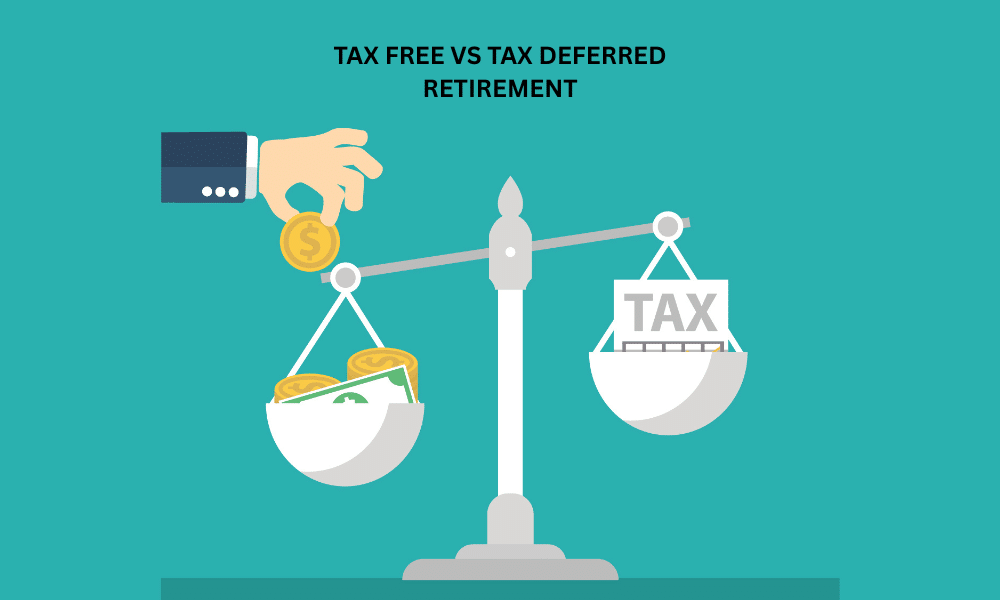
This structure is unlike the conventional retirement accounts which today contribute to a reduction in taxes yet the withdrawals are taxed later.
Simply stated: Pay taxes today, evade them tomorrow.
Why Tax Free Retirement Accounts Matter
One of the highest hidden retirement costs is taxes. It is possible that the rates might vary, the amount of income could grow and tax law cannot be predicted in the future.
Tax free retirement plans provide:
- Foreseeable retirement earnings
- Insurance against tax increase in the future
- Enhanced compounding in the long term
- Increased flexibility of withdrawal
Tax-free accounts are usually a significant consideration in retirement tax planning to younger investors and the high-income earners.
Types of Tax Free Retirement Accounts
Roth IRA (Most Popular Option)
With a Roth IRA there is tax-free growth and tax-free withdrawals after age 596 in case the account is more than five years old.
Key highlights:
- Income limits apply
- IRS imposed annual contribution limits
- None of the mandated minimum distributions (RMDs) are necessary
Best where: The investor wants to benefit more in the future due to increasing taxes.
Roth 401(k)
Roth 401(k) is provided by employers and comes with high contribution limits and tax free withdrawals.
A Roth IRA allows tax-free growth and qualified withdrawals in retirement when IRS rules are met.
Key highlights:
- Increased contribution limits as compared to Roth IRA
- Employer match (match becomes taxable in future)
- RMDs can be used except when rolled over
Good: Works best with employees desiring tax-free expansion on a large scale
Health Savings Account (HSA) – Triple Tax Advantage
Although it is not described as a retirement account, at age 65 and above, an HSA will be one of the most potent tax free retirement tools.
Why HSAs are unique:
- Gifts are tax deductible
- Qualified withdrawals do not attract tax.
Best: Individuals that have high-deductible health plans.
How to Open a Tax Free Retirement Account (Step-by-Step)
- Select the type of account (Roth IRA, Roth 401 (k) or HSA)
- Check qualification (wage rate, availability of employers)
- Choose a provider (brokerage, bank, employer plan)
- Bank the account (lump sum or monthly contributions)
- Invest wisely (diversification is not a trivial issue)
- Display regulations (IRS limits change) yearly
To open a tax-free retirement account, you first need an active Bank account to fund your contributions securely.
Costs & Fees (Typical Ranges)
| Cost Type | Typical Range |
| Account Opening | $0 |
| Annual Maintenance | $0–$50 |
| Investment Expense Ratios | 0.03%–0.75% |
| Advisory Fees (if used) | 0.25%–1% |
Specific costs will be determined by the provider and investments chosen.
Pros & Cons of Tax Free Retirement Accounts
| Pros | Cons |
| Tax-free withdrawals | No upfront tax deduction |
| Protection from tax increases | Contribution limits |
| Ideal for long-term growth | Income restrictions (Roth IRA) |
| Estate planning benefits | Rules must be followed |
Tax Free vs Tax Deferred Retirement Accounts
| Feature | Tax Free | Tax Deferred |
| Taxes on contributions | Paid now | Deferred |
| Taxes on withdrawals | None (qualified) | Taxed |
| Best for | Future tax protection | Current tax relief |
Common Mistakes to Avoid
- Violation of income eligibility programs
- Checking money limits without checking
- Repatriating profits prematurely
- Failure to invest within the account
- Using a single type of accounts
Expert Tips for Maximizing Tax-Free Retirement Income
- Integrate Roth & Traditional account
- Retirement is HSA, not spending account
- Invest tax savings in a strategic manner
- Check contribution limit on an annual basis
- Collaborate with a registered tax professional in cases where the income becomes high
Building wealth through a tax free retirement account requires a disciplined Long-term financial mindset and consistent planning.
FAQs
Q1. Is tax free retirement account superior to traditional?
It is based on how much you have to pay in tax as opposed to retirement.
Q2. Do Roth IRAs offer full tax exemption?
Withdrawals made by qualified persons are tax free provided that the conditions are adhered to.
Q3. Is it possible that the high earners utilize tax free retirement accounts?
Yes, Roth 401(k)-s or backdoor strategies.
Q4. Are there any fines on premature withdrawals?
Yes, income can be taxed and fined.
Q5. Are tax free retirement plans limited?
Yes, there are annual limits and which vary with time.
Q6. Is it possible to have more than one tax free account?
Yes, when there are rules of contribution followed.
Conclusion
One of the strongest tools in the development of wealth in the long run and shielding against taxes in the future is a tax free retirement account. Properly used, it provides insight, management and security in the retirement income planning.
Tax-free retirement accounts should be in the middle of your financial plans should you aspire to retire with more money and less tax surprises.
Begin to examine your retirement plans, and make them long-term tax efficient.
